"...when the last individual
of a race of living things breathes no more, another Heaven and another
Earth must pass before such a one can be again."
-William Beebe
 • SEARCH ALBC
Milestones 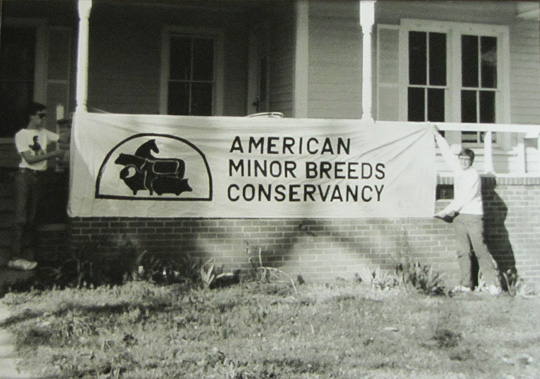
1977 – The American Minor Breeds Conservancy form on March 16 in Vermont. First membership meeting held in October at Hampshire College.
1980 – AMBC almost disbanded, but Elmer Van Gheem’s phone call looking for directions for the final 5 miles to the director’s meeting after traveling over 1,000 miles (from WI) to attend inspired others and AMBC survived! Ridgeway Shinn volunteers to act as Executive Director. San Clemente goat removal begun on island.
1981 – San Clemente goat removal/rescue begun by the “fund for the Animals” completed.
1982 – AMBC became a federally designated non-profit.
1983 – Smithsonian magazine publishes an article about rare breeds and AMBC – spurs interest.
1984 – First foundation grant received – from the CS Fund. This grant allowed the hire of an Executive Director and financed the work on the first census.
1985 – Elizabeth ‘Libby’ Henson, daughter of Rare Breeds Survival Trust founder Joe Henson, was hired to be Executive Director. AMBC moves to North Carolina due to the opportunity for free office space and a more central location.
1986 – First AMBC census reported, membership at 800. Additional San Clemente goats rescued and “Fund for the Animals” agrees to a limited breeding program and distribution of the goats they processed to AMBC members.
1987 – Laurie Heise becomes Executive Director. AMBC becomes first conservation organization in the world to add poultry to its mission. Completion of poultry census. Establishment of the rare breeds semen bank, named after James Nolfi. Rescue of the Santa Cruz sheep (December) and first rare breeds show and sale. Last Randall cattle herd saved from going to the slaughterhouse (April 7).
1988 – Published The American Minor Breeds Notebook, Donald E. Bixby becomes Executive Director. Santa Cruz sheep rescued from the island. (A few in 1986 and some again in 1997.) AMBC’s rescue of Ossabaw Island pigs. (Other groups of pigs had been removed in the 1970s as well.)
1992 – The Art of American Livestock Breeding, a collection of paintings, debuted at the National Agriculture Library and toured nationally. Organized by John Dawes, the exhibit raised national interest and awareness of AMBC and rare breeds.
1993 – AMBC name change to American Livestock Breeds Conservancy. New logo is created to accompany the new name.
Early 1990s – ALBC participates in the founding of Rare Breeds International.
1994 – Published the book, Taking Stock.
1995 – Published the book, A Conservation Breeding Handbook.
1996 – Published Noah’s Ark Today educational program.
1997 – Began work on turkeys, including a census which found only 1,335 breeding birds. Published A Rare Breeds Album.
1998 – ALBC website is launched.
1999 – Published Birds of a Feather.
2000 – Conducted a census of waterfowl. Published Taking Stock of Waterfowl. Received an award from Slowfood USA for our work conserving breeds. ALBC nomination of Bourbon Red, Bronze, Buff, and Narragansett turkeys were accepted to Slowfood Ark of Taste.
2002 – Chuck Bassett becomes Executive Director. ALBC celebrates 25th anniversary.
2003 – Published 2002 turkey census results in Heritage Turkeys in North America. With ALBC’s help, the number of heritage turkey breeding birds increases 230% from 1997.
2004 – Published Counting Our Chickens, reporting chicken census
2005 – Rabbits officially added to the Conservation Priority List. First Heritage definition released (for turkeys).
2006 – Published The Nankin Bantam, Heritage Chicken Recovery Project begins with Buckeye chickens.
2007 – Published Managing Breeds for a Secure Future, celebrates 30th anniversary.
2009 – National launch of the Heritage Chicken definition to promote the Heritage Chicken label in the marketplace. ALBC member logo created.
2010 – Published first full-color ALBC News.
2011 – New membership levels released…$35 for basic membership. Rare Breeds,Breeders and Products Directory goes online. Java work begins in Heritage Chicken Recovery Project.
2012 – L. Eric Hallman becomes Executive Director. ALBC celebrates 35th anniversary. First workshop for military veteran farmers, From Service to Stewardship held. Saving Endangered Hog Breeds project begins.
| The American Livestock Breeds Conservancy | |
PO Box 477 |
ALBC is a trademark
of American Livestock Breeds Conservancy. |
Pittsboro, North Carolina 27312 USA |
|
Telephone: 919-542-5704 |
|
Fax: 919-545-0022 |
|
|
HOME About
ALBC Breed Information Calendar ALBC
Store |
|